Showing posts with label Creative Writing. Show all posts

Sunday, January 3, 2021

What We Found in the Woods

2019: We went for a walk in the woods, you, me, and your family. The sun was out, and the snow was glistening. The trees were bare, though I could feel that in the warm winter air they were beginning to awaken. As we whisked through the forest, waltzing amongst trees that stood like sculpted pillars around us, something mystical occurred. 

Maybe it was the way the sun was shining, like a romantic sort of photograph in which the sun ignites the world with a flare, with sun-specks or sun-spirals or sunny-streaks that shimmer in your hair. Maybe it was the way the forest floor was frosted over with snow, like a ballroom floor glimmers below crystal chandeliers. Something about the way the trees whispered of spring and the way the earth smelled of change gave me a breath of something that felt like certainty. 

We came to a river, frozen at the foot of a gorge. Your mom told me about your childhood, about picnics and the way the trees had since changed. You told me that a lot of your stories took place here. Maybe that is what made the place feel so nostalgic; even though I’d never been here before, there was memory here. There were little versions of you running through the trees. 

I too grew up in the woods, running through trees with dirty feet and feathers in my hair, searching for adventure like Peter Pan’s Lost Boys; storing secrets in tree-trunks and looking for the entrance to Narnia or other lost realms.   

Forests have a weird way of appearing timeless even as they change. We both grew up in forests of our own, forests that we mapped and memorized, forests filled with the trees we climbed and memories of us as bare footed summer children, our noses sprinkled with freckles and our heads crowned by the sun, fancying ourselves the kings and queens of our forest kingdom.

It wasn’t then, but at some point in time my forest and your forest aligned. It occurred to me then, that, as I prepare to leave my forest behind, I wouldn’t so much mind moving into yours.


 2021: We went for a walk through a different wood this rather warm winter day and I was reminded of this piece I wrote almost two years ago. Me and my husband were only just dating, and I went to visit him over the break. It was the first time I met his family, the first time we started talking about what our future would look like. 
I decided almost on a whim that I would move to his province that summer. Sometimes I wonder if we would still be married now if I hadn't.
But that is the way adventures go, is it not? Occasionally a whim strikes us, almost like a childish desire to run away to live in the woods, but much more serious. 
All I knew then was that I was restless without him, and that home was where he was.


Sunday, November 29, 2020

The Wordless Writer's Worthless Hours

A writer walks across a field and suddenly a flash of lightening strikes them: I want to write is the only thing that remains in their mind after the shock fades. 

Their spine tingles a little with the electric snap, and their neck feels stiff. No one else around them seems to feel it. No one else seems to notice that they have come to an abrupt halt midfield. But there it is, clear as day, astounding as the clear sky above: I want to write. 
 
They leave the field, not caring which it is; soccer, football, or wheat. They leave the field, and they drive home. 

The shock seems to be the only thing that matters. They can feel it flowing through their veins, pulsating in the back of their skull. Word, words, words, they course through the awakened writer; their brain, their hands, their heart. 
Every word the world is wrapped in is suddenly at their disposal. 


Word. Words. Words. They flicker on their laptop's screen; writing, then erasing.
After a while their hands no longer shake. After a while their eyes become tired. Their spine aches from sitting hunched in the kitchen chair. Soon their hands start to tremble; the writer probably hasn't eaten since noon. 

They eat a quick amount of nothing. It doesn't matter what goes in their body, unless its books to fill their mind or vocabulary snacks to sink their teeth into. They browse dictionaries or an online thesaurus, glowing on their face like a fridge, searching it for something to fill themselves with.
 
Their eyes look back at the page. There is nothing on it for them to read.

The darker it gets, the brighter their screen seems to glow; words fizzle and flounder, unattainably there in the bright white page. They burn like on the sun's scorching surface. The writer blots them out as they try to grasp at the vapor before the words sizzle away and all that's left is water marks, like their dusty laptop screen.


Probably the writer will not write anything that matters that night. Their brain is tired and clumsy, and their heart is on repeat. (I want to write, it says. I know, the writer whispers.) 
 
After hours of typing and trying, they grab their laptop, and they drive back to the field. 
There, in the cold, in the same spot where the need to write struck them, the writer sits under the stars and lets their laptop glow on their face. 

The people are gone. It is only the writer and the stars now, the writer and the stars and a gaping desire within them to write something down. 

But, after hours of trying, the writer realizes that there is nothing to say. So, they close their screen just to open it again. The light of their laptop pulsates in their tired eyes, pouring its white vacancy into them. 

They realize that they are no longer looking at the screen. It is more like it is looking at them, trying to figure them out, trying to decide why they stay so long when they have nothing to say. 
 
The glow fills the writer through their pupils, like the morning sun on white sheets; it fills the writer up and smooths them out, softening all their crinkles, every wrinkle, every fold. 
 
The white page peers at them. 
 
I want to write, the writer says. 
 
Only after the screen closes its eyes and goes to sleep does the writer at last go to bed, thinking as they fall asleep about how much they'd rather be writing, and how much they might say.

The desire to write doesn't always come with the words. But the yearning makes it ache sometimes. It drains out your hours and your sleep; it makes you forget to eat sometimes. The writer spends these worthless hours writing worthless things. Words, words, words sometimes lead to pages. But there is only one thing of value on the laptops tattooed face on nights like these: Words, paragraphs, pages, filled with every word the world is wrapped in; all new ways to say with the attainable alphabet how much the writer wants to write.
 
So, as the sleepy writer slumbers, the heat fades from the tired laptop, and the books on the shelves whisper in their sleep, like distant owls in the night. The cat snores softly. 
The desire doesn't sleep, though. It is the first thing on their mind when they awake. 


I myself have spent endless hours in that field, searching for the words like a lost wifi connection and looking out for lightning, hoping that the flash will strike, and I'll be able to write at last. 


Sunday, October 25, 2020

The Perks of Living in Disarray

Being a sort of "Story" but also a Pro and Con List (of sorts)
 
Written on the theme of Anticipation in Fall 2018


The Germans have a word called vorfreude which basically means the joy that comes from anticipation. This joy is one shared by all those who lead ordinary lives, when they mark dates of anticipation in their calendars and count down the days till birthdays or anniversaries; days when loved ones come home or important events take place; moments of anticipation which come with grand roles of the drum, like dramatic climaxes or a grand crescendo. Anticipation is a part of life, and it is the closest to which ordinary folk ever come to pertaining any sense of foresight in their lives.

I say ordinary folk because I do not consider myself ordinary. You see, I have never experienced this thing which the Germans call "vorfreude". The closest I get to anticipation of any kind is a sneeze. This is because, for as long as I can remember, I have lived my life in disarray.

Most folk think that it comes with the regulation of calendars that all days are to be lived in their proper order. Wednesday follows Tuesday, and if September comes, one can always be sure that October will follow. But I myself have never been very organized, and personally I have always had a blatant disregard for rules.

For example, I consider Mondays to be optional. Birthdays is another thing which I immensely enjoy, but the act of growing up need not necessarily be done in an efficient manner. I only have one life, after all, and I like to live according to my mood. I choose days like some people choose what to wear in the morning. What’s the point of waiting for something when you can just enjoy it now? –That's what I always say.

 Of course, I still keep a calendar. But, while some folk cross off days all tidy and orderly, I cross off mine at random. Even living one’s life in a disarray needs to have some sort of order, you can only live each day once, after all. (I don't really feel like getting into what happens if you accidentally live the same day twice. The experience still gives me nightmares).

I particularly enjoy being eight. But there being only 365 days in which I get to be eight, I have to be sure not to out-live them all. I try to maintain some sort of balance in my chaotic lifestyle so as not to run out of good days before I die. Birthdays is another thing with which I take serious precautions. I don’t yet know when I die, but I know I only have a limited number of birthdays in my life, and I don’t plan on running out of those any time soon.

 Being seventeen has been another good year for me. That’s the year me and my best friend Max start a band. We have some good times together, but for some reason I’ve never run into Max anywhere beyond the age of twenty. I considered contacting him once, beyond the brink of my twentieth birthday, but I try and live as spoiler-free as I can. I find it’s the most care-free way of living. And so if I find myself living in the aftermath of some sort of disaster, I usually mark the days pertaining to that time with some sort of warning. So, while anticipation remains something which I have never experienced, I am a master of avoidance. Who knows, maybe mine and Max’s short-lived friendship was for the best. There are some things only my past self knows, and I like to keep it that way.

Though every once in a while, I inevitably stumble across a spoiler. I know that I get engaged to a girl named Anni around the time I’m twenty-five. I don’t know how I meet her yet, and so in an effort to avoid any unnecessary awkwardness, I stay away from any days past our estimated time of engagement.

 I also regret to admit that I still haven’t finished all my days of kindergarten. Those days to me are like a never-ending to-do list of slobbery children and alphabet songs. When it comes to years like those, 365 seems like a big number.

Of course, every once in a while, I come across a particularly bad day. Any day of being nine is bound to be awful. I know my dad walks out on us sometime that winter, and by springtime me and my mom have moved into a stuffy apartment in the city. I don’t like hearing my mom cry, so naturally, I try to avoid being nine as much as I can.

But no day will ever be as bad as the time I lived a day of twenty-one and found out my mom had died earlier that year.

I went back to being nine after that, not because I particularly wanted to, but because I had the sudden urge to hug my mom. Living in disarray has its ups and downs, but life has those anyway. There will always be bad days, only difference is, I get to choose when I want to live those. 

You’re probably wondering why I’m telling you about all this. I don’t usually take the time to write down my thoughts, because frankly, I’ve never had the patience to do so. But I recently learned about the German word of vorfreude, and it got me thinking.

It had never occurred to me before that anticipation could be a joy rather than a drag. My calendar with its shambles and unruliness used to be a catastrophe I reveled in. My life is like a chaotic jigsaw-puzzle with holes in the middle and pieces long since lost under the depths of a dusty couch. But I always thought I liked it that way. Now I somehow can't help but wonder what it might be like to live a life of vorfreude.

I thought I’d visit a particularly dreary day to give me time to think.

The day I chose was rather a muddle to me, I don’t remember much of it, but I do remember thinking that I rather liked fall, though I’d never realized it before. Aside from my mom having died, twenty-one has never been that bad a year for me, all things considered. Twenty-one-year-old me actually has a job, which I gotta say is both a nuisance and a convenience.

Halfway through the day I discovered some change in my pocket and decided to spend it on a drink. I sat at the counter for a while looking over my calendar at all the appointments I’ve never kept, the due-dates I’ve never met, all those times I avoided going to the dentist. I was trying to decide which day to live next, feeling a sense of hopelessness when this girl approached me. 

I had noticed her sitting across the room for a while, reading what appeared to be a leather-bound notebook. She didn’t say anything for a moment, just looked at me as if she wasn’t quite sure what she should say.

I don’t think I knew it then, but in that moment of silence, I think I felt a twinge of anticipation. I saw the thoughts flicker in her eyes, and then a spark came into them.
“Do you know what the date is?” she asked.

I didn’t. Heck, in that moment I don’t even think I knew how old I was. I glanced at my calendar. It was the 9th of October. Or was it November?

I’m not sure what I settled on in the end, but she laughed, so I’m sure I got it wrong.
We talked for a while after that. I’m not entirely sure about what exactly. Though I know we talked about music and about art, and at some point she ordered a vanilla sundae. She ate the entire thing but left the cherry in the plate.

It puzzled me for a while. Everyone knows you’re supposed to eat the cherry first, but there it was, sitting lopsided in her empty plate.

She must have noticed me staring at it, because she smiled, then picking it up she said, “I always save the best for last.”

She left not long after. She didn’t leave me with so much as a name, and I found myself feeling sad, and a little disappointed, though I wasn't entirely sure why. Yet somehow, I couldn’t shake the feeling that something important had just happened.

That’s when I noticed her notebook.

I didn’t want to touch it at first, though I briefly considered running after her and returning it, but then I caught a glimpse of the inside through the dog-eared curl of the cover.

It was a calendar.

I had never felt such a strong sense of climax in my un-climactic life than when I reached out and flipped the pages.

In many ways, it was just like mine. She had drawn it out herself in an untidy, disorganized way. The months were written on-top in funky lettering. There were scribbles and warning labels, messy doodles lined the edges and tally marks with which she counted down the days. The only difference was, her days were all crossed off.

Which brings me to today.

I have decided not to keep a calendar anymore. Living my life in disarray has been fun, but yesterday I experienced what I believe can only be vorfreude, and so I am leaving the chaos of my youth behind me. I’m still going to count down the days though, not because I’m waiting for something but simply for the joy of anticipation. As of right now though, I am merely looking forward to tomorrow. I’m not sure why yet, but I have never lived a tomorrow before, and who knows what it might bring. 

Thursday, August 27, 2020

An Evening on the Lake

Rainy afternoons sometimes give way to the calmest evenings. On this particular night, I found myself within the realms of a pastel painting. 

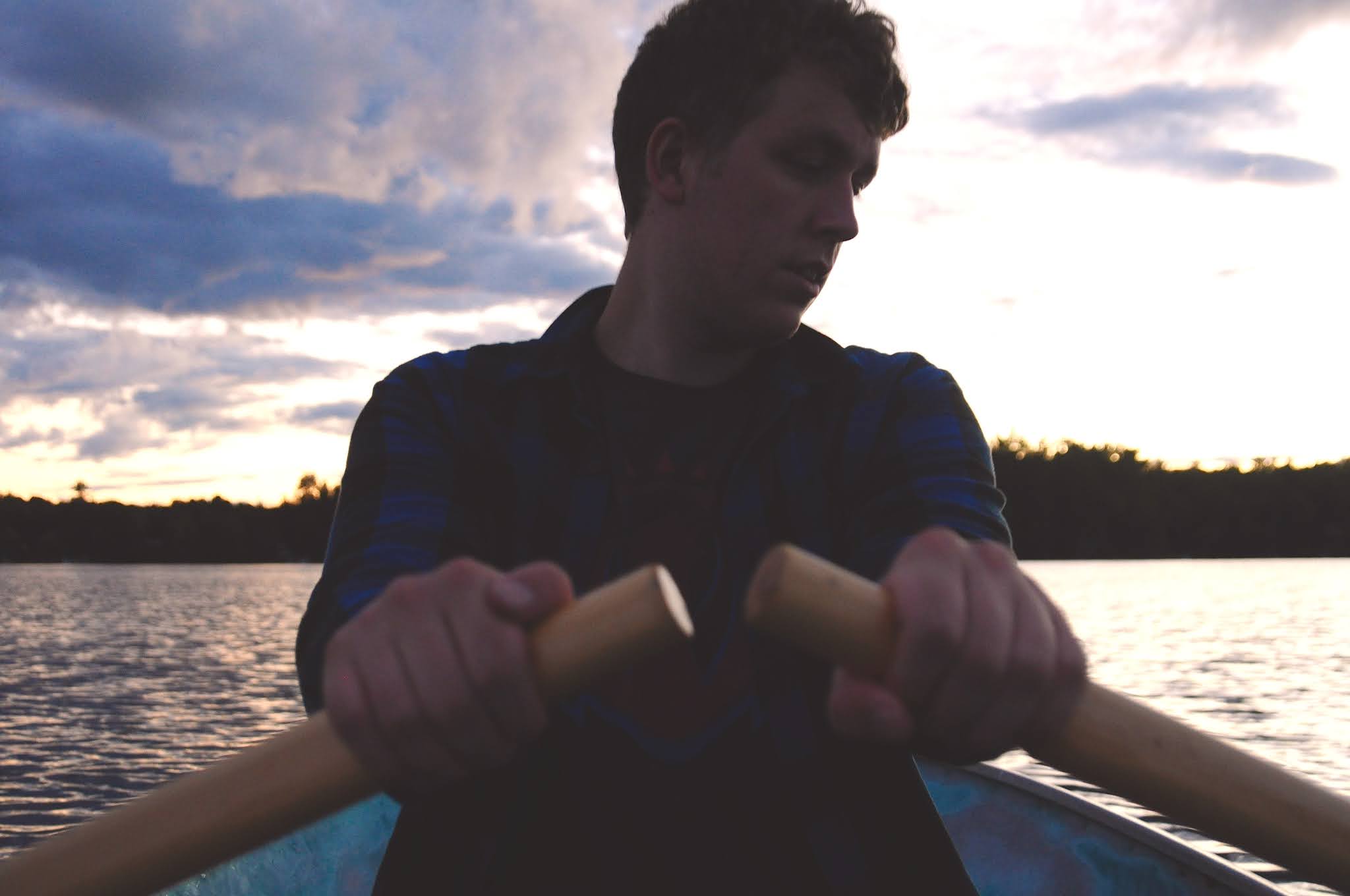
My husband took me out onto its horizon.


The colors shimmered on the water. Soft tones of blue and pink rippled as he took me out across the narrow lake. 


Through the pastel world we drifted. And yet, I took as many pictures of him as I did of the water. My, was he a sight to see. 


Next, he took a few of me, as the world turned blue beyond.  


But the sun wouldn't stay, and so, slowly, the colors slipped away. As the blue darkness swept over the water, my husband rowed us back to shore. 


The colors grew dim, but for an instant we were painted, picturesque and still.  
So the pastel painting faded into black just as the lovers left its rim.


God is an artist. I believe this as surely as I believe in Him.

Saturday, August 1, 2020

Looking for a Protagonist

:A Letter to Protagonist I Once Misplaced
 
Seeing as I've come to a new pit-stop in my writing, I thought I'd share this entry from one of my private notebooks, written on January 20th of last year.
Finding my main protagonist has been a longtime coming. In all the side-treks I had to take on the journey to get where I am now, I often wondered if I would ever get to him. At times it seemed he was reluctant to enter the story; at others, it seemed I was merely reluctant to find him.


January 20, 2019

Something has to change before I find you.
Something is not quite right yet or I'd have found you already. I need to grow as a person and as a writer before I can do you justice; before I can do myself justice by you.
You are my main character, after all. You will be my most real creation. And yet, you will also be the hardest to obtain, the hardest to keep around, the most difficult to make tangible in your paper-existence. You will be a long time coming; a long time in the making.

I created you out of pain, and disappointment, out of addiction, and regret, and I cannot do you wrong.
You could be the most real thing that I will ever write. Perhaps. If not to others, then to me.
Perhaps that is why I write your name in the gentle whisper of a pencil, so easy to erase. Perhaps that is why I read it like a secret, cross it out when I find it on lost pages. I keep you locked within my mind, turning, lingering, still in the unwritten pages, or rather, in a draft left unedited, lost in the version of a story I am no longer working on.
It is only when I write your name I know that you're still there waiting on the edge of a story that is not yet ready for you.


I am getting my story ready for you. Till now, you have been like a ghost, a half-remembered name, written, but unspoken.
I have searched the pages for you, knowing that a word had the power to pull you forth from beyond the fringes of a paper too often unfolded. I could tug at you with my words, pull you out, pull you in. But nothing good ever happens without patience, without time.

Looking for you has been a journey in itself. Finding you again will be a more challenging and exciting journey still.


Wednesday, July 22, 2020

Writing When You're in a Hurry

How to Write When You're a Whirlwind

A Whirlwind: A chaotic rush, fast approaching, swiftly passing, never lasting.


How can you write in the midst of a drought when writing for you feels like a whirlwind? How can you write when you climb your hill in expectation, let lose your hair, but find no breeze to lift you?

And still the wind is on your mind. You're too aware of your own breath when its calm; too aware of the limitations of your own existence.

Writing is like a turbulence of words that overcomes you; but you, with your butterfly net, you who puts out buckets and basins to collect it when it falls, catch so little of it. You find that the wind cannot be caught in nets; find that still water is too tranquil, too unlike rain, far too tamed by your small vessel to offer much inspiration.
  
You may wander the fields afterwards, once the storm has spent itself. You look for lost treasures in the tillage, things you missed that the earth didn't already take from you. But if there are seeds in the earth, maybe the storm will make way for things to grow.

They grow in the calm, even when you're not looking, even less when you do (you cannot watch a sapling sprout in your slow-human-seconds). But did you plant the right seeds?

Let us dig and find out if your seeds have what it takes.

You planted white things; planted paper; planted sleeplessness; planted an alphabet by the keys of an old typewriter. You planted the books you once read, now decomposed and rotted in half-remembered, dirt-stained passages. You planted half formed visions, hoping that they'd grow. You planted feelings, also half-forgotten because you never wrote them down. You planted patience, such small simple seeds, the whirlwind could take them, and you'd decide you do not need them (you'd rather watch for storms). You planted watering cans with rusted spouts with which to do the watering (how counterproductive writers are). You planted faulty scales with which to measure the greatness of your rain-water because you wondered once how much rain it takes to make a pond, a lake, an ocean. (How many words it takes to write a book, I've always wondered. But who has ever counted?)


You may regret ever taking up gardening as you sit there, with dirt on your knees and in your finger nails, with leaves in your hair still damp from the last rain.
But then you find one pretty seed in the earth, already sprouting roots, and you know: this one craves, this one desires, this one hopes. Seeds turn into trees sometimes, and you can feel it by the determination of its little roots that this one wants to grow; wants to know what it will be when it grows.

Trees take a long time to grow, so much longer than flowers. Trees turn into books sometimes; not just one, but hundreds, even thousands. How many words can trees hold on their pages, I wonder? More leaves than they've ever sprouted, surely.

You forget sometimes how much time it takes for trees to grow, that what you plant today won't grow until a great many tomorrows.

But how counterproductive writers can be when they doubt themselves; when they plant seeds just to dig them up again, forgetting that it takes so much more for things to grow than a planter, a gardener, a caretaker. Leave it in the dirt next time.
Next time, let the storm do the watering, but get up in the morning and water it some more. Seeds grow slower when you watch them, but people say that they like to be talked to.
You, you who writes in whirlwinds, you will talk to it sometimes, late at night when you can't stop thinking; when you put words to your own mind instead of paper, writing imaginary books in the space between waking and dreaming, because writing is so much harder when you're distracted by your wakefulness.

Books get written sometimes; out of paper, words, and things-once-read. Books get written, with patience, with doubt, and an untraceable craving, deeper than the pen can delve. The desire for books to exist, to write, to pass on stories, is as ancient as the once young sapling's wish to grow up to be a tree.

Books get written sometimes. But only if you give it time to grow.

So next time when you plant your garden, plant a little time.


Thursday, June 25, 2020

Looking for the Manx Cat

A Chase After a Symbolic Cat Which Appeared Briefly in Virginia Woolf’s A Room of One’s Own

Anyone that’s ever tried to catch a cat knows that they can be tricky creatures. Cats are beings of mischief. They are quick, and they are sly. They disappear into shadows and crannies like into fantastical rabbit holes. Furthermore, anyone who has ever spent an extended amount of time observing a cat might have noticed that they always give one the impression that they know something which no one else does. Perhaps it is the way that they blink at you, slow and steady like, completely self-satisfied in keeping their secrets to themselves. But, whatever may be said about the trickiness of realities cats, the cats which one meets in books are far trickier.
Anyone who’s ever encountered a fictional cat knows that, whatever it is that the cats of this world aren’t telling us, the fictional cat certainly won’t tell us either. Do not get me wrong, many fictional cats will swindle and tease you with their riddles, and I wouldn’t say that the fictional cat is a liar, but I don’t know if I’ve ever met a fictional cat that spoke a bland truth. In fact, I’m quite sure there wasn’t a single one of them that was not a riddler.

You’ve probably met the Cheshire Cat, and if you haven’t, I’m quite sure you’ve heard of him. But, if his reputation has somehow evaded you, I should explain that he is a most remarkable trickster. He knows more than he says, and yet never says what he knows. I could not name another who is quite so remarkable, though that has little to do with me not knowing of any others whose tricks and riddles exceed his and more to do with the fact that most other cats, at least the ones which I have encountered, do not have names.
The cat who appeared in Neil Gaiman’s Coraline certainly comes to mind, for he is the one that first remarked that cats do not need names simply because they have no use for them. He told me that “people have names… because you don’t know who you are. We know who we are, so we don’t need names”. And I must say, I quite agree with him.
The nameless cat in Peter S. Beagle’s The Last Unicorn is another trickster whose sole purpose is to confuse you. He, like the trickster from Gaiman’s Coraline, also fashionably neglected to introduce himself to me, saying only “I am what I am”, and “I would tell you what you want to know if I could… But I am a cat, and no cat anywhere ever gave anyone a straight answer”. 
It wasn’t until recently though that I encountered a more peculiar creature still; a creature that one might say is a riddle all on its own. Yes, fictional cats may be tricky, that much I know, but the symbolic cat might just be the trickiest trickster of them all.

The symbolic cat is in itself a peculiar creature, it is, as Virginia Woolf says, “quaint rather than beautiful” (A Room of One’s Own, 17). But what makes the symbolic cat so unusual is that we expect symbols to mean something. Yet I do not expect that I will decipher any meaning in our search for the Manx Cat. As I’ve already said, chasing a cat is tricky business. But chasing a symbolic cat may prove near impossible, for cats in books disappear between pages like cats in the real world disappear into shadows, and the Manx Cat has already managed to swindle us, for though he appeared briefly in the title of this essay, I have quite lost track of him since in my excursion after these other fictional tricksters, so let me get back to the point.
We are going to chase the Manx Cat. I first spotted him on page 15 of Virginia Woolf’s A Room of One’s Own, and so, if we are to find him, that is where we should begin. 


If I recall correctly, Virginia Woolf had just set the scene by remarking that “it is a curious fact that novelists have a way of making us believe that luncheon parties are invariably memorable for something very witty that was said,” (A Room of One’s Own, 13), which I find rather unusual, because the most curious event of this particular luncheon party was the arrival of the cat, (who did in fact not come to the luncheon party but stayed humbly outside on the lawn), and he didn’t say anything at all.
Woolf then goes on to mention all the things which novelists neglect to mention about the on-goings of luncheon parties, such as the soup and salmon that was eaten and the cigars that were smoked, as if this was of “no importance whatsoever” (A Room, 13). Indeed, the writers who failed to mention these details might not even have mentioned the uninvited guest who showed up outside the window.
Woolf had just remarked, most earnestly I’m sure, that all the members of the present luncheon party were going to heaven and exclaimed how right the world is with all its sweet rewards and trivial grudges and grievances and how admirable the friendship is between society and all of their kind (A Room, 14), when the uninvited guest makes his timely arrival.
Of course, the completely unimportant and previously unmentioned ashtray comes into play here, but had it not been there, had things, as Woolf says, “been a little different” she would never have spotted the tailless cat outside (A Room, 15)

He looks just as he did the last time I saw him here. Like before, he does not seem to notice his not having a tail, neither does he notice us watching him, though he is certainly aware of his having made his way once again into an essay, for there is an air of importance about him as he flicks his non-existent tail. Woolf watches him, and she cannot help but notice, as she did the last time, that “something seemed lacking, something seemed different” (A Room, 15).
In an effort to search for this missing thing, Woolf thinks “herself out of the room” (A Room, 15).  We follow her as she meanders through her thoughts into the past to another luncheon party which happened not so long ago. Though she remarks that at first glance everything about this luncheon party is different, everything is also very much the same (A Room, 15). The talk is the same, the room is the same. I imagine the attendees are eating soup and salmon and that the same ashtray sits idly on the coffee table waiting to be dumped.
Unfortunately, though, no one goes to dump the ash out of the window, and so, no matter how much we strain our necks, we will not be able to glance outside. We will never know whether or not there was a tailless cat outside the window. Though somehow, I have an inkling that the Manx Cat had little business there, for what could a tailless cat possibly want at a luncheon party that is so rich and nostalgic; a luncheon party in which nothing is lacking and men and woman hum love poems to each other. I think, if there was a cat outside this window, it probably had a tail.


I have not been to many luncheon parties and so I cannot be sure just how inappropriate Woolf’s random outburst of laughter was. But I cannot imagine that the other attendees understood the joke when Woolf, in an effort to explain her laughter, points at the Manx Cat outside. I must admit, I am not entirely sure I understand the joke myself.
The Manx Cat leaves soon after, for the luncheon party ends, and as it slips away, without so much as an exit, the only thing which we have left to ponder is how strange it is “what a difference a tail makes” (A Room, 17). Though it is rather puzzling that it should show up here, for Woolf does mention that the tailless cat is “rarer than one thinks” (A Room, 17), and so the odds of us sighting it again are rather low. 

The Manx Cat disappears for a long time after that. He might have appeared briefly on page 56 if only to look disapprovingly at the notion that anyone could lock a cat out of anywhere, even heaven.
I followed Virginia on her wanderings the last time I was here, and as I followed her, I kept my eyes open, watching ever for the Manx Cat. And, as I searched for the Manx Cat, Virginia searched high and low for her missing thing. She went searching in gardens and libraries and museums; she searched through the centuries of time, through natural histories and whimsical ones; she searched through the scope of a looking glass and at the point of her pencil; she peered into secluded rooms and wandered empty streets and graveyards, all in search of a flicker of a shadow; a shadow that looks somehow very much like the queer form of a cat.
Eventually, she does what any intelligent person would do when looking for a lost symbolic thing, like a missing cat that never was and may never be again; she goes to the library and, picking up books that aren’t there, she looks for things that are missing. Leafing through these imaginary books, she turns “page after page…feeling that a crisis was approaching” (A Room, 118).
The crisis comes in the form of two people on a beach, a man and a woman who walk towards each other under the sun. In the fanciful world they may have been named Phoebe and Alan. In a more nostalgic world they may have been two poets named Alfred Lord Tennyson and Christina Rossetti. Whatever their names were, we will never know for certain because neither of them bothers to introduce themselves; in fact, neither of them says a word. But the Manx Cat greets you with the nod of his head, for he too sits there on the beach, and he turns to you grinning, very much the image of the Cheshire Cat. And although he does not speak, there is something in his grin that suggests a remark, a sly whisper perhaps –something like “Hello, I am the Manx Cat.”

But, on second thought, I cannot be too sure that that is what the Manx Cat would have said. For as the two people part ways without so much as a goodbye, and their obstructive shadows form into blockades, the Manx Cat blinks its cunning eye, and I could have sworn I might have heard him whisper something like… “Hello reader, I am something missing. I am something wrong.”
But then again, I cannot be sure, for the waves were crashing and the gulls were calling, and the pages flipped, and then the cat was gone.

As I walked along the beach nearing the end of the essay and heard the traffic roar, as Mary Beton ceased to speak, and the sun on the beach peered into the common sitting room, all I was left with was the shadow of a notion that, if I were to write an essay about women and fiction, I would go to another luncheon party. I would look out of the window, and I would not see so much as the solitary shadow of a cat. But there, out on the lawn where the ashes have blown, a cat’s tail hangs from a tree or a hedge, ragged and battered by the wind. But where the cat went, I wouldn’t know.


Sunday, June 21, 2020

How We Tried to Keep the Moon

The day we found out the moon was leaving the world looked to the sky.
Even though we were told the moon w
as disappearing, we suddenly saw it everywhere. It was on posters, in the papers, and on television channels. The headlines were inescapable: Moon Leaving Earth’s Orbit. Newsagents shouted it in the streets and you’d overhear it in passing conversations. We didn’t know when or why the moon was leaving us. We would look out of our windows and there she’d be, in the sky where she’d always been, seemingly unaware that she had become the novelty of the decade. She was the headliner, the main attraction, the newest thing, and yet, to the naked eye she hadn’t changed at all. The moon looked the same as it always had.
Yet on earth, the prices of telescopes quickly went up. People climbed mountains and towers to get a closer look at her, almost as if we thought we could witness her departure. We became a society of moon-gazers. But, as day by day we watched her from our rooftops, nothing seemed to change. The moon waxed, and she waned, but she had always done that. The uproar died down eventually, and soon everything returned to normal.
Until the day an Italian philosopher rowed out to sea. He said afterwards that the easiest way to follow the moon is by boat, for nowhere does she seem closer than out upon the waters. He was the first to notice that the moon had shrunken.
Of course, no one could prove it. The mathematicians and the astronomers did their calculations, yet their math could not convince them. Across the nations, people raised their thumbs to the night sky. The moon had shrunken, and nothing could convince them otherwise. 
So, it was that the world became obsessed with the moon. It was as if now that we knew that she was leaving the world had rediscovered her vitality to the sky; almost as though we had forgotten that she had been there all along.
Never-the-less, the world came together; scientists, inventors, scholars, explorers, and philosophers; masterminds and visionaries of all sorts band-together with but one ambition: to figure out how to convince the moon to stay.

The first to attempt it was a Russian physicist who believed that the best way to retrieve the moon was by strengthening the earth’s gravitational pull. Rumors circulated about the possibilities of magnetic power. A couple of documentaries were filmed and for a time this convinced the people that the problem would be solved.
But, as more and more moon-gazers took to the sea, people quickly became aware that the ocean’s tides were falling. Things only got worse after that.

The next to hit the headlines was a French inventor. Sketches of blueprints were released of a preposterous contraption designed to reel the moon back into the earth’s orbit. A commotion of stories followed.
Though word of the French inventor soon disappeared, extremists and enthusiasts of all sorts endeavored to construct the Frenchmen’s invention. Technicians, Architects and Carpenters attempted to build the device. Everyone wanted to be remembered as the person who had saved the moon.
For a while, this society of innovators took over the news. Stories were heard of people climbing the Eiffel Tower in an attempt to lass the moon. But, as the stories became more and more absurd, the Frenchmen’s scandal was soon forgotten.
The world continued as normal for a time. But the story of the moon’s flight soon resurfaced when a German Astro-photographer snapped a shot of her in her full form, a photograph which he claimed was proof of her departure.
Once again, the moon seemed to have shrunken right before our eyes.

Scientists no longer tried to disprove that the moon was leaving after that, though whether that was because the Astro-Photographer’s photograph had convinced them or whether they had decided it was best to ignore the upheaval no one really knew.
But, as the scientists stepped away, the artists took over. A sensation of works followed of which the moon was the latest inspiration. She became a prodigy, a monument of art.
The first to captivate the audiences with their moon-work spectacle was an English playwright who had written a play about a poet who built a ladder atop mount Everest and used it to climb to the moon.
Not long after, circuses started advertising acrobats who could swing into the night sky and funambulists who slung lines to the moon. Dancers waltzed on the moon and artists painted her. A composer released a rhapsody of lullabies inspired by her. Sonnets and nursery rhymes were written. Filmmakers released features about her, and a Spanish chef created a concoction known as moon-cheese.
But the funny thing is, in all the hustling and bustling, people stopped looking at the moon again. She was still there for all to see, yet people were too busy to notice her.
The last piece of moon-art I ever saw was a mural painted on the side of an observatory depicting the moon breaking free from its bounds of nooses and chains and forces of magnetic power. Under it was written in broad letters Free the Moon.
The moon never did end of leaving, and yet, somehow, we lost her still. Though the mural was painted over a few days later, I can still see visibly in my mind’s eye the image of the moon drifting off into space like a great balloon, finally liberated from her shackles. Sometimes when the moon peeks into my bedroom window late in the evening I cannot help but wonder why it is that she decided to stay.