Showing posts with label Summer. Show all posts

Sunday, August 22, 2021

Tom the Oldest

Tom Bombadil is a being so powerful and strange that even his creator did not know what to make of him. 
 
While fans and scholars have speculated and disputed his nature, they neglect to consider that the man who discovered was himself wise enough to refrain from doing so. Tolkien respected the mysterious nature of Tom Bombadil. He did not fret with Tom but simply left him be in his corner of Middle Earth, a corner which by Tom's mere presence is perhaps the most unusual and miraculous of that map. 
 
Since I am rather well-read in Middle Earth lore, casual Tolkien fans sometimes ask me if I know who or what Tom Bombadil is. But in all my years of enjoying Tolkien's lore I have never found an explanation concerning Tom Bombadil that satisfied me, but one. 


It seemed a fact not worth mentioning that the character of Tom Bombadil was inspired by a Dutch doll that belonged to one of Tolkien's children. While this may go so far as to explain some of the very specific and colorful attire Tom is known for wearing, such as his yellow boots, as well as Tom's carefree and almost childish nature, it does not at first glance say much else about the ancient figure; till you learn that Tolkien used to tell his children stories about that doll.
 
While reading Tom's own songs about skipping through the trees and along river beds, one can almost picture Tolkien bent over his children's beds, the shadow of the doll cast across the bedroom wall as he animated it with his hands and his voice, bringing it to life with his stories. 
 
Tolkien told his children stories long before he ever actually completed writing one that satisfied him; and so, one can know with certainty that Tom came along long before Bilbo or Hùrin, or even Gandalf. 
These were only shadows cast big and small, vague impressions in Tolkien's mind left by the lore he loved and the legends he read. Names of characters he later wrote about can be found in obscure Norse fragments we know Tolkien used to study. Images resembling Tolkien's own line some of the Fairie realms he once dwelt in.
 
But Tom Bombadil was there, real, tangible, childish, put forth with the easy flow of a narrative told for one's own children, living up only to their whimsical standards, and not Tolkien's own. Tom offers us a glimpse into what those stories might have been like, there in the bedrooms of his children when he did not burden himself with self-doubt and a work beyond imagining in the course of an evening. 
It is strange that something that at first seems so easy should puzzle readers for so very long. Tolkien did not wish to understand Tom Bombadil. Indeed, while most everything else about Middle Earth is rich with history and thought, Tom Bombadil exists outside of that, he escapes that, in more ways than one.
We must decide that Tom Bombadil must simply be left be. 


In the end, the only thing that has ever made any amount of sense to me about Tom Bombadil was what Gandalf says about him. At the Council of Elrond, he tells that Tom "is oldest." 
Tom is older than Middle Earth both inside Tolkien's works and outside of it. Indeed, out of all the vivid faces and scenes that linger when I reflect on all I have loved in Middle Earth, I know Tom Bombadil has been around the longest. He was around long before any of Middle Earth's histories were written, for he lived outside of them once. He knew Tolkien before he was weighted by success and immense writings.

I know only that Tom Bombadil is so ancient that the only origin I have ever traced of him in all my Middle Earth wanderings is the curious and puzzling figure of a Dutch doll in yellow boots. And where that came from, none but Tolkien need ever know. Though I greatly doubt that he himself would have been able to remember. 

Sunday, June 13, 2021

The View from the Window

Virginia Woolf's To the Light House
 
Anyone reading Virginia Woolf for a story will find themselves sorely confused. Virginia Woolf does not write stories. She writes about people. She spills life in lines, spurring characters into action and musings, supplementing them with acute details, letting them exist with a stubbornness that only real things possess. While her character's outer shapes are cast like silhouettes into memory, their thoughts and musings flow from the page into one's mind so smoothly and so easily, it is as if they were one's own.
No one fits life, with all its richness and wondrous ordinariness, into books like Virginia Woolf.
In To the Lighthouse, Woolf fits a handful of lives, not just into a book, but into a day. We meet the cast of the novel on a summer's day on the Isle of Skye where we spend half the novel with them, observing their thoughts, watching the children play, listening in at dinner. We get to know them only to have them disappear. 


The books first section, titled "The Window" provides a window-view, allowing us a glimpse into the character's lives. Woolf knew how to write thoughts, but she also knew how to write time, and here she draws it out like a beam, gloriously, wondrously. That single day feels like the type of day one longs for as soon as it is over. It is full of good company, walks along the beach and other simple time-passes, and, importantly, revelations realized from the wondrously ordinary. It is indeed not a story, for there is little permanence in it and little happens that we have not experienced ourselves, in one way or another. 
From the beginning, one quickly loses the illusion that this is a story, in which one event follows another. Rather, the book feels from the outset like a memory, and if it is a memory, it is a fond one. 
 
Like most fond memories, this one takes place away from home and the everyday-ness of life, during the summer, surrounded by good company.
 
Throughout, it is as if the people inside the story know they are characters inside a book, for every moment of their literary lives is heightened, full of deep discovery. Through the text-lined window from which we see them, the characters exist at the pinnacle of their being, and every moment, once ended, is immediately stowed into the space in which one keeps their fondest memories. Every moment within the first half of To the Lighthouse reminds one of the good old days, which ever those may be; and though they are not ours, we remember our own golden days; days in which, looking back, we feel we were our best selves, were with our favorite people; the days in which we so gloriously happy that we realize too late that we forgot to revel in it. 


Throughout the book, it feels as if the characters are aware that they will never exist outside the limit of these 200 pages. Thus, the moments they do have contain all the life inside of them, reminding one of the days in which they felt most alive. Every thought within reads like a sigh, as if the characters whose minds we momentarily share are taking pleasure in this simple instance of their existence. 

This gives them both a permanence and a vulnerability because I, the reader, know that they will be here again. In their time-span this will be the last trip to the Isle of Skye as a completed family. In my life though, I know they will be here again, for if in a few years I reread Woolf's To the Light House I will find them there still, feeling a bit like a memory or a dream. I will find them going for walks, painting on the shore, reading to their children, alive and returned to those sweet days which they long for in the latter half of the book. 

While at times that single day seems to last forever, one still gets a sense that it is slipping through one's fingers. Moments heightened by thought last a while only to drift away in an instant. So, dinner ends and Mrs. Ramsay knows that it is already a memory. Sometimes it is not clear whether something has already happened. Is Mrs. Ramsay thinking about something that happened this morning? Or is it something that has been done so many times that it is a part of the very fabric of her life? Still, this single day wanders back and forth like the tide, and mundane tasks are thought about as if they are already memories.

Indeed, I had not yet ended that near perfect day for the first time when I wrote in the margins of the book that the characters only existed here, in this stretch of a day across half a novel. There is no day that comes after this one, for when it is over ten years pass in an instant, as with a breath extinguishing a candle. I knew before I'd even watched time unleash itself in the "Time Passes" section that if the family did not decide today to go to the lighthouse tomorrow, they would not go at all. If the missing brooch was not found on the beach that evening, it probably never would be. If Mrs. Ramsay did not finishing knitting her son's stocking by the time the day was through, she never would. 

All one ever has is a day before time unfolds like pages full of unwritten story, and a perfect summers day becomes the good old days of a lost past.


To the Light House is itself a window, like a house one often passes late in the evening, the people inside are always there, in the soft light behind the glass, inviting the illusion that they never change. I know I will pass this house with its glowing window again, and I know that even as I circle the garden, time will pass above me like a lapse replayed. 
Still, when the longing for the good days nestles inside me like an ache, I will read about the Isle of Skye and the family that used to come there every summer, knowing full well that even books are limited in their capacity to hold things, and so, I will not get to go to the lighthouse, no matter how many times I try. I only get to look upon Mr. Ramsay and his children come upon it from a distance.  
 

Sunday, August 30, 2020

Writing in the Rain

Everyone has got their muse. Mine just happens to be the rain. 


I don't know how this really started. I just know that one day I convinced myself that all the best things I'd ever written happened on rainy days. 
Over time, I have come to rely on it for that; that when the rain comes, the scene will get written, the chapter completed, writer's-block beaten. 
 
Occasionally something good will come to me on a sunny day, but it takes a dedicated kind of focus and a calmness of the mind to bring me there. That being said, all my sunny-day-scenes tend to feel more peaceful, sometimes sad. Rarely are they of the same kind of impact or vitality as the things I write when it rains. 
 
Writing in the rain has its upsides and its downsides. It's both erratic, and reliable. 
When it doesn't rain for weeks on end, I feel as desperate for it as the earth around me. I feel parched, dried up in my creativity, like the thirsty plant shrivels. 
And yet, when the clouds come over me, I know that today I may write again. It always rains eventually, and when the drought ends, so does my writer's block. 
 
Over the years, the metaphor has only become more perfect. How sporadic rain can be. Just like inspiration, it sometimes comes when you least expect it, or don't want it at all; when you have prior engagements and you have to chose to either duck-out and feel guilty for missing life, or miss out and feel regret for the words that might have been written. Inspiration waits for no one. And the storms don't plan their schedule around me.

And so, I plan around it, when I can. I look at the weather forecast and make excuses on days when I want to slip away; do nothing but listen to the tap of the rain on my window and the click of my quick fingers typing, nothing but cross empty pages, showering them with curled letters, little dotted words that drizzle and then drench into paragraphs.

Ah, yes: the rain, it comes like a river. 

But then there was a day this summer when it rained so much, buckets filled and spewed over, saplings drowned, every dirty window for miles was washed clean, and all I could do was sit and look, and watch the rain fall. I don't think I wrote more than a page that day. 


I don't know what the lesson here is, other than that maybe there's a balance to everything. Just like words don't always come when it rains; just like how, a few weeks after that rainy day on which nothing was written, I wrote the best scene I'd written all summer on a hot humid day; in the same way that long busy winters always give way to rich and rain-full summers in which so much is written, writing comes with ups and downs. 

Rain and sun, inspiration, depression. Sometimes it rains, and words fall like a waterfall. Sometimes there are other things to do, like to sit and simply watch the rain fall. 
 
When it comes down to it, I'm a writer on rainy days and on sunny ones; I'm a writer in winter, and in summer, whether I'm writing or not. 
For all of these things are part of it, you write, and you live, and then sometimes you write some more. And occasionally, all it takes to be a writer is to sit and listen to the rain fall and let your keyboard be still.


Thursday, August 27, 2020

An Evening on the Lake

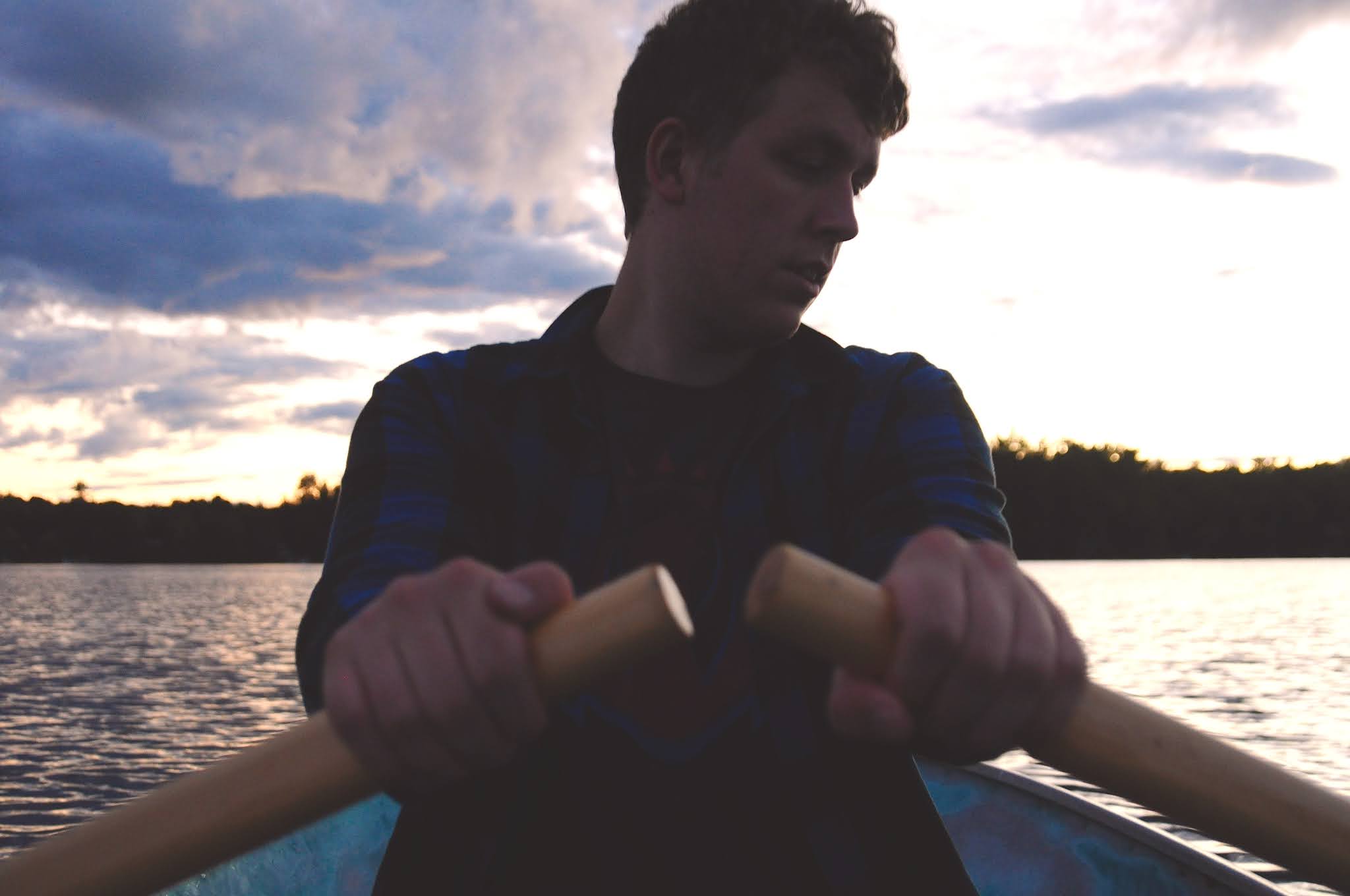
Rainy afternoons sometimes give way to the calmest evenings. On this particular night, I found myself within the realms of a pastel painting. 

My husband took me out onto its horizon.


The colors shimmered on the water. Soft tones of blue and pink rippled as he took me out across the narrow lake. 


Through the pastel world we drifted. And yet, I took as many pictures of him as I did of the water. My, was he a sight to see. 


Next, he took a few of me, as the world turned blue beyond.  


But the sun wouldn't stay, and so, slowly, the colors slipped away. As the blue darkness swept over the water, my husband rowed us back to shore. 


The colors grew dim, but for an instant we were painted, picturesque and still.  
So the pastel painting faded into black just as the lovers left its rim.


God is an artist. I believe this as surely as I believe in Him.

Tuesday, August 25, 2020

Rainy Days at the Cottage

It rained at least once each day while we were at the cottage. On this particular day, however, it rained for most of the afternoon into the early evening. After a brief swim in the rain, I slipped into some dry clothes and curled up in a chair with a book.


Eventually I got so sleepy that I snuck upstairs to the loft where we were sleeping. I awoke to the sound of the rain still pattering on my window and the sound of the trees quivering.


Nothing gives me such a deep and comfortable peace as rainy days like these.


Sunday, August 23, 2020

Take off to Ontario

Last Thursday I didn't know we would be flying to Ontario the next day. 

We booked our flights at 11:30 at night and packed our bags. Then, after 4 hours of sleep, we headed to the airport. 

I've always wanted to pull off a spontaneous trip like this. Of course, we couldn't have done it without all the people who accommodated their plans for us.

It is now more than a week later, and we are back home and safe in quarantine. I'm still not sure how we pulled it all off, but I'm so glad we did it. What a crazy wonderful time we had.
 

Saturday, July 25, 2020

Tolkien, Trees, and other Thoughts

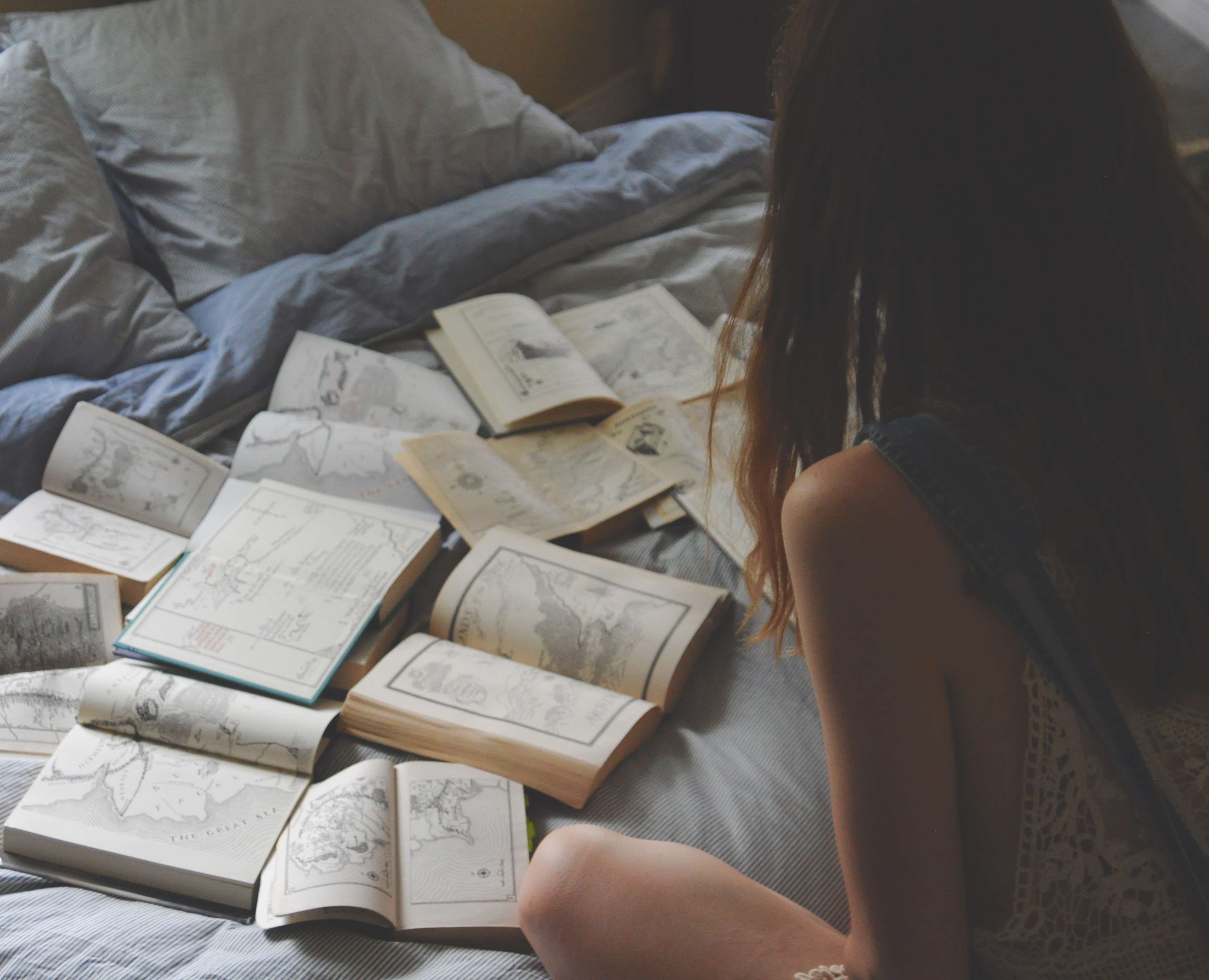
I got distracted by the light dancing across my book as I was reading The Letters of J.R.R. Tolkien this afternoon.

I love the tree outside my bedroom window, almost as much as I love reading in the afternoon. I love sleeping with the window open so I can listen to the hush of the leaves in the night. I greatly enjoy all the little critters that visit me outside my window, from the birds that come to sing in the morning, to the family of squirrels that sometimes come to gawk at my cat. It is also my favorite place to take a nap, there in the tree filtered afternoon-sun.


Tolkien was himself a great lover of trees. Thus, it is no small wonder that The Lord of the Rings pays such special attention to them. Indeed, the trees are the personality of most every landscape in Middle Earth, be they of the hostile or illustrious variety. They are the constant dwellers, watching over passersby and temporary inhabitants that come and go throughout the years, such a short while in the long life of a tree.

Tolkien himself had a tree outside his window once which he claimed helped inspire his story Leaf by Niggle, an odd and wonderful tale that feels altogether dreamlike. He wrote about this tree in the books original introductory note, saying

"One of (the tale's) sources was a great-limbed popular tree that I could see even lying in bed. It was suddenly lopped and mutilated by its owner. I do not know why. It is cut down now, a less barbarous punishment for any crimes it may have been accused of, such as being large or alive. I do not think that it had any friends, or any mourners, except myself and a pair of owls."


Altogether, leafing through these letters written by a mentor that I will never get to meet has been wonderful, even more so than I expected.
Reading through his rambles –regarding such themes as the struggles of procrastination in the face of productivity, his constant anguish at the regrettable busyness of his schedule, and the woe brought on by a book that doesn't want to get done, have all made me realize that maybe I know what I'm doing after all. Self-doubt is no stranger to even the greats.

I sometimes feel small in comparison, so un-heightened by time, so stuck in the scope of the present with a book that is only as old as the files containing it on my computer; a book that is still so unlived in. But knowing that someone I so admire has struggled with the same things as I am toiling with now brings me an unexpected sort of comfort. All this is mostly normal, after all; as normal as the life of anyone who takes up writing can ever be.

Tolkien barely dared dream that so many would share in his delight for his Middle Earth.
Books are wrought only with great pain and frustration, for the imagination rarely complies well with the limits of our vocabulary and the hampered frame of the page.

But once the wrestling is through, and the writer sits back and cries in wonder and fear at what they have created, the book becomes severed from them. As Tolkien wrote:

"(The) goal was reached at last. It is finished... (but) now I look at it, the magnitude of my disaster is apparent to me. My work has escaped my control, and I have produced a monster."

Sometimes the book fades away after that, collecting dust on a back shelf, thought about from time to time only by they that sired it, sometimes with fondness, sometimes with regret. But every so often, if chance allows, a book will fly away to other horizons, where it finds other shelves, from that of a publisher, to possibly that of a reader.

Who can ever know for certain how many shelves a book can make a home in, nestled in comfortably, as if it's already forgotten they that toiled for it before it could stand up on its own. But, the writer won't know: not where it goes, nor how shelves it comes home to; much less how many readers might find a semblance of home in reading it.

Indeed, no one can ever truly guess what might happen when you release a wild book onto the vast world.

For now though, it is much nicer to simply read under the shadow of a tree, and dream of the day when my own book will forget about me and find a home on the shelf of another.


Thursday, July 9, 2020

A Stormy Night with Charles Dickens

It was a dark and stormy night in which I read Charles Dickens.
I read till late, till Book the Second made way to Book the Third, fittingly entitled "The Track of a Storm".

I stopped then and listened to the thunder shake my little house, and wondered at how awful and awe-inspiring it must be to see the sea rise in a storm like this one.

"But, there were other echoes, from a distance, that rumbled menacingly in the corner all through this (little) space and time. And it was now... that they began to have an awful sound, as of a great storm in France with a dreadful sea rising." ~A Tale of Two Cities

Thursday, July 2, 2020

Running Away with Fictional People: Writing Advice to Take you Off the Beaten Path

What to do When your Characters Don't Want What you Want


I read a quote once that stuck with me. I cannot for the life of me trace it, but this is the line as best as I remember it.

"I can't stop reading. The characters might do something without me."

This little line never fails to make me smile, for it perfectly captures the excitement of reading a good character driven story; of running off with fictional friends; of having grand adventures with a band of fanciful troublemakers, painting fences, or seeking treasures; sleeping in hay-stacks with wandering orphans; chasing characters who chase rabbits down holes, or crawling after them through little doors. In these situations, I don't mind feeling like the quiet friend in the bunch. In fact, there is never a better time to be the quiet friend, because everyone knows that the reader is the protagonist's closest and most reliable friend, usually being the one that follows the protagonist most closely, (till the pages end, that is).


But there's more to this simple line, where ever it comes from. It doesn't just capture the thrill of being a reader. It also encapsulates something I believe firmly about writing. In short, it suggests that characters can all too easily get away from us, go on without us, and undergo adventures or shenanigans long after the book is closed, the lights out, and the reader sleeping. 
 
Yet, while this idea is a thrill to the reader, it can keep a writer up at night. Indeed, the writer is in much closer association with the character than the reader that will later come to know them. For the writer, it can feel a bit as if the character is asking them if they can come out to play, or rather, pestering them with questions in the hope that the writer can explain their existence. Why did I have to do that? Why are we going there? What's the point of all this? Where is this story going? –These are the types of questions I imagine the character might be asking. But, of course, it isn't the character that is asking these things at all, but I, myself, the writer, the one spinning the character into their paper existence. Furthermore, the reason I am asking myself these questions is likely because I doubt the character's existence; doubt that they are in fact believable; that their actions make sense; or that they will feel real enough to the reader. It is a constant worry for any writer that their characters don't feel convincing enough, and frankly, it would be a great insult to hear that they were not.
I am fond of my characters, as any writer is. And I have come to be rather fond of these late night conversations with my characters, even if they often result in sleepless nights, in many ons and offs of the nightlight, and many quick scribbled notes, brief lines of dialog or descriptions of body language I do not want to forget in my sleep. I have come to enjoy these nights for the simple fact that I rarely get such one on one time with my characters; times in which I remove myself from the voice my narrator speaks in and start thinking in my own; start looking at my creation from the perspective of me, the life that created it. And, ironically, it is these late nights in which my characters keep me awake with the doubt that they are not real enough that my characters seem most alive to me.

I can honestly say that my wrestling with my characters does not go beyond these nights, and when the words and the rain comes, my characters take over the page. It is then that I feel a thrill like no venture as a reader as ever given me, for nothing will ever be quite as risky and as wonderful as setting a character free on the page and letting them do just what they want.


I have often heard the writely advice that a writer should control their characters, and while I understand the reasoning behind this, I cannot say that I agree.
In writing about fictional people (if that is something you have ever done, you will know what I mean), you will often find that your characters will try to get away from you. "My characters don't want to do what I want them to do," goes the complaint.
To this the sensible writer will say something like "What do you mean, they don't want? You created them, didn't you? Your characters will want what you want them to want." This is fine advice, over all.
It is, in fact, a logical argument. But the argumentative side of whether you should wrestle with your characters by editing out the parts of them that defy you and your vision for the plot is beside the point. What you should really ask yourself is this: What kind of story are you really writing? Are you writing about people, or about situations; about personality, or plot? If your characters aren't enacting the plot the way you imagined they would, maybe there's a reason for that. Maybe you should go with it. It is the character driven plot, with all its curious children and never-yielding tricksters that makes readers feel like they're adventuring with a friend, as the quote above suggested. Readers, after all, love to read about people, about fictional personalities, both grand and wonderfully simple (think of any Hobbit you ever met). When a character makes decisions which have been forced onto them by the writer, the reader can always tell because the reader is themselves a person; and when a heart tugs at you or a curiosity probes your mind we can rarely ignore it.

Ultimately, there is a very simple reason for this. We humans, while still capable of intense logic, are at the core of our being creatures of wants, of dreams, of desires. That's why history, both real and mythological, is full of people falling prone to the illogical sides of themselves; making mistakes because of it; wheeling in mysteriously gifted horses through our gates; ringing bells to awake long-sleeping witches; eating forbidden fruits; kissing sorceresses; crawling over walls to break into locked-up keeps. Characters, like people, make irrational decisions. And while I am not arguing that you should allow irrationality to rule the plot, I believe nonetheless, and very firmly, that a wonderful and wild story is created when we allow our characters to make these decisions, even if they are irrational or inconvenient to the narrator.

Consider, for example, Tolkien's Lord of the Rings. This is undoubtedly one of the most famous fictional epics of all time, and it was written because a man (namely, Tolkien) followed a Hobbit out of the Shire totally unknowing what he would find outside its borders. I myself am convinced that if Tolkien hadn't set his protagonist free from his outline and the plot's expectations Frodo would still be named Bingo and the world would have lost one of its biggest fictional adventures ever put to the page.

Maybe my advice to you is simply to write like Tolkien. Because, although the edits later on might be extensive, I believe the most unpredictable and unexpected stories occur when not even the writer can foresee exactly what lies ahead. Yes, this may be risky, maybe it's even dangerous. But you can't have adventure without a little danger. And, if you're one of those writers who writes because they first loved to read, then write like you love to read. Don't just take a reader on a journey. Go on a journey yourself. Even if you know the destination, or plan to make a few stops along the way, at least be daring enough to be curious, to run off from the charted course, to explore un-plotted territory.

What it comes down to is this: If your characters are trying to run away from you, maybe you should let them. You never know where they might take you. After all, what more could a writer want than to write about characters that actually have wants of their own.

Sunday, May 31, 2020

A New Life

It's been so long that I don't even know where to start. But I have to start somewhere, I suppose.

Thinking back to the last few times I wrote on this blog, it's strange to think how much has changed. How many things have become settled, and how many things are still changing. I am saddened by how little I wrote for myself during this time of change, for those words will always be lost to be now. There will only ever be a before and an after; for the life I had before and the life I have now bares so little resemblance to one another.
I started my young adult life like most other young adults, by searching for what I wanted, for the life that I would one day have. And though I always thought I knew what I wanted, I had no idea what that would look like.
How far I have come since then.

Enough with the ambiguity. The last time I wrote on this blog I was starting my first semester of university. Since then I have moved across the country. Made a home for myself. Landed my dream job, and met the love of my life.
  
But this is only just the beginning. Life will forever continue to change.
It's been a wonderfully challenging year with many new and exciting struggles.
Every stage of my life proves to be abundantly busier than I ever thought I could be, and this year I did not stop for months. This year, I moved five times, from one city to another, and through three different provinces. This year, I finally chose a minor to accompany the major I chose for myself when I was in the fourth grade. This year I got engaged. I wrote more chapters than I ever have before.

But, this is only the beginning. My young life was just the prologue, the upbringing before I set out on the adventure of a lifetime.

This new stage of my old life will be busier and more challenging than anything before. But it will also be incredibly wonderful.


P.S. Thank you to my Opa for still asking about the blog I never write on. It was just the push I needed ;)